Ends March 23
Winter Quarter 2026 Begins January 12
by Minh Từ -


Buddha Dharma University is a unique institution of higher learning that focuses on continually forging opportunities to experience a contemporary, in-depth and non-sectarian study of Buddhism, while also promoting the knowledge and understanding of the various traditions, schools, and cultures of Buddhism.
Programs are taught and mentored by scholars and masters from a variety of traditions, which takes advantage of America’s unique diversity of Buddhist practice and presentation. We are both a seminary and a general Buddhist teaching center.
Buddha Dharma University provides the opportunity to experience a profound, meaningful, and rewarding path towards Buddhist scholarship and awakening.
We are staffed by Buddhists (including monastics as well as married, ordained clergy) from many diverse walks of life, each willing, qualified, and happily able to guide students along the Buddhist scholastic path. Our mentors are all volunteers, they dedicate their time to helping others in accord with the Bodhisattva Vow in order to keep our tuition to a minimum. Many ordained Buddhist monastics from each of the three major schools of Buddhism (Theravada, Mahayana and Vajrayana) are involved in guiding the continual process of the refinement, development, and formation of our programs. We seek to build a bridge between the isolated silos of Buddhism which have evolved since our original Asian founders have passed on.
If you believe Buddha Dharma University is right for you, we encourage you to apply. If you are accepted, and become one of our students, please come with a Beginner’s Mind: willing to learn…and dedicated to seeing the Dharma unfold in your own life.
Half of what we know is wrong. This isn't a problem. The problem is that we don't know which half. Because of this, we create many dramas and dukkha for ourselves. It doesn't need to be this way.
This course examines several major schools of Buddhist thought, with a focus on how we know if what we think we know is accurate. It surveys how we should investigate our experience, our sense of self, the six realms, four major philosophical schools of thought (Vaibhashika, Sautrantika, Mind-Only, and Madhyamaka), resulting in Seung Sahn's modern way of putting it all together (the Zen Circle).
The earliest written teachings of the historical Buddha were written in the Pali language, a language similar to the one the Buddha spoke. Although the Mahayana sutras and texts often reference the Pali sutras (or suttas, in Pali), we are then hearing someone's interpretation of the Buddha's words. I find it instructive to go back to the originals to see the richness that sometimes gets lost when we summarize the teachings. There are thousands of Pali sutras, so this course will just be a beginning intro. I have chosen sutras that I feel are particularly interesting, useful, or foundational for the teachings and expressions of the Dharma that came later.
Core reading materials are provided in-course.
LIT505 - Buddhist Ceremonies (3 Units)
No Prerequisites: Chanting Practicum I and II
Textbook: Zen Liturgy - Korean Zen Practice Forms
9 week course
LIT503 - Meditation Practicum One (3 Units)
No Prerequisites
Textbook: None
9 week course
We are thrilled that you have taken the opportunity to use this service to strengthen your connection to your inner strength and spirituality!
Each week you will be given meditations to accomplish. We encourage you to dive in wholeheartedly -- with great courage -- so that, gradually, some of these activities will develop into your all important Daily Routine. The daily routines are the fundamental practices that will become your individual daily practice long after you finish your program of study with us.
If you’d like to share the experience with a friend, why not send them a link to the site and they can sign-up too? It can be very helpful when developing a routine to receive support from those around you.
LIT504 - Meditation Practicum Two (3 Units)
Prerequisite: LIT021
Textbook: On Line Resources
9 week course
Each week you will be given meditations to accomplish and gradually some of these activities will develop into your all important Daily Routine.The daily routines are the fundamental practices that when combined become your individual daily practice long after you finish your program.
We are thrilled that you have taken the opportunity to use this service to strengthen your connection to your inner strength and spirituality.
Oh, and if you’d like to share the experience with a friend why not send them a link to the site and they can sign-up too. It can be very helpful when developing a routine to receive support from those around you.
The practice of Buddhism requires meditation. We all learn how to do it, usually fairly early on. Many of us go on to start meditation groups. But the practice of teaching meditation is a bit of a different matter. How do we learn to guide others into their own meditative practice, especially in a group setting?
This nine-week course explores teaching various forms of meditation, with an emphasis on teaching mindfulness meditation. Mindfulness, when learned properly, is an excellent gateway to self-awareness and the ability to experience discomfort without an accompanying existential crisis. Our main course book focuses on mindfulness as a road to exploration, with individual lessons throughout the course touching other practices.
Books required:
A Clinician's Guide to Mindfulness (Christiane Wolf, MD. PhD and J Greg Serpa, PhD
ISBN: 978-1-62625-139-7
LIT502 - Chanting Practicum Two (3 Units)
Professor: Ven. Do'an Prajna
Prequisites: LIT501
Textbook: None
Course Length: 9 weeks
This is a second level practicum in which chants from the Korean and Vietnamese lineages common to special occasions and ceremonies. Most of the chants covered in this course are chanted in foreign languages, primarily Sino-Korea, but also Vietnamese, Pali and Sanskrit. At most temples and practice centers ceremonies will be performed in the traditional style, so it is important to become familiar with them. As an American or Western Buddhist tradition comes into its own, these ceremonial and special occasion chants will likely be chanted in English. But until that day, much of our chanting will likely move back and forth between English and foreign languages. A practicum implies "practice", which means that this course is a hands-on and participatory. The student is required to actively engage with the chants in order to benefit from this course. As the student practices the chants in this course, a personal style of chanting is encouraged. Students will be given license to express themselves more freely during their daily liturgy practice.
The Sangha was originally established by Gautama Buddha in the fifth century BCE in order to provide a means for those who wish to practice full-time in a direct and highly disciplined way, free from the restrictions and responsibilities of the household life. (Source) Today, the word Sangha has evolved to include any group of people who practice the teachings of The Buddha. The Sangha is one of The Three Refuges--The Buddha, The Dharma, & The Sangha. Or, the historical teacher, Siddhartha Gautama (The Buddha), the teachings of The Buddha, and the community of people practicing together.
This nine week course involves visiting by Zoom various different Sanghas. (A Sangha may or may not be associated with a physical temple.) We will then explore our reaction to each of those temple's traditions, as they will all be different, and they all will have the same heart--the alleviation of suffering, or dissatisfactoriness.
BST513 - Spiritual Materialism (3 Units)
Prerequisites Textbook:
Cutting Through Spiritual Materialism by Chogyam Trungpa Rinpoche
9 week course
In this modern spiritual classic, the Tibetan meditation master Chgyam Trungpa highlights a common pitfall to which every aspirant on the spiritual path falls prey: what he calls spiritual materialism. The universal human tendency, he shows, is to see spirituality as a process of self-improvementthe impulse to develop and refine the ego when the ego is, by nature, essentially empty. The problem, Trungpa says, is that ego can convert anything to its own use, even spirituality. His incisive, compassionate teachings serve to wake us up from this trick we all play on ourselves, and to offer us a far brighter reality: the true and joyous liberation that inevitably involves letting go of the self rather than working to improve it. It is a message that has resonated with students for over thirty years and remains fresh as ever today. This edition includes a foreward by Chgyam Trungpas son and lineage holder Sakyong Mipham.
This course, designed for introductory, general interest study and is specifically designed for Community Colleges.
BST516 - The Mirror of Zen (3 Units)
No Prerequisites
Textbook: The Mirror of Zen by Beop Joeng
9 week course
From the preface: "If you were to comb the mountains and valleys of Korea, polling every meditating monk and nun and hermit and ascetic as to the most necessary, essential, inseparable compendium of teachings apart from the Buddha's sutras themselves, chances are that most of them would choose The Mirror of Zen. It is by far the most quoted, most cited, most referred-to text in the tea rooms and teaching halls of the Zen temples in Korea."
Its author was Zen Master So Sahn who was born in 1520 in what is now North Korea. He became a monk at 21 and during his lifetime he assumed leadership positions at both the Zen and Sutra schools of Korean Buddhism. For this book, he chose 86 teachings from the Buddhist canon as the essence of of Zen. He also added commentaries, gathas, and capping words for our benefit.
In this course we will study this great book. The class will consist of reading assignments, video lectures, forum activities and quizzes. The professor will be also be available. The goals for this class are to introduce us to this great book and ultimately to learn from a great Zen Master in the Korean tradition.
BST517 - Dropping Ashes on the Buddha (3 Units)
No Prerequisites
Textbook: Dropping Ashes on the Buddha
9 week course
This course will cover the stories of accomplished women who became Buddhist leaders and mentors. Across many cultures, from the time of Buddha until modern times, women have followed the Way. From varying circumstances and often against the cultural norms of the times, these women opened the path for themselves and others to experience the fellowship of Sangha as they followed the teachings of the Buddha and lived according to the Dharma.
Required Textbook: Women of the Way: Discovering 2500 Years of Buddhist Wisdom by Sallie Tisdale.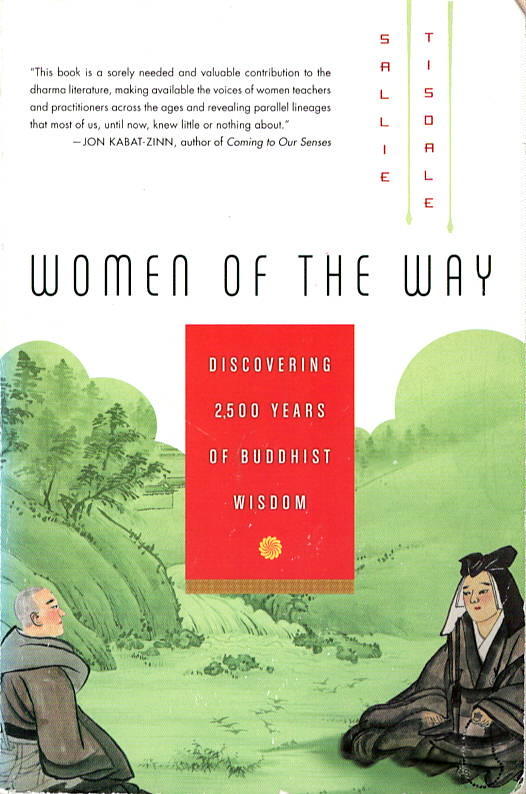
BST519 - Foundational Buddhism (3 Units)
No Prerequisites
Textbook: The Heart of the Buddha's Teaching - Thich Nhat Hanh
9 week course
In The Heart of the Buddha's Teaching, Thich Nhat Hanh introduces us to the core teachings of Buddhism and shows us that the Buddha's teachings are accessible and applicable to our daily lives. With poetry and clarity, Nhat Hanh imparts comforting wisdom about the nature of suffering and its role in creating compassion, love, and joy--all qualities of enlightenment. Covering such significant teachings as the Four Noble Truths, the Noble Eightfold Path, the Three Doors of Liberation, the Three Dharma Seals, and the Seven Factors of Awakening, The Heart of the Buddha's Teaching is a radiant beacon on Buddhist thought for the initiated and uninitiated alike.
In this course we explore the stories of historic and modern Zen Teachers through 100 historic kong-ans and commentary by modern teachers - women, all of them. Women have always brought a different flavor to Zen, both in practice and teaching, and it's all-too-often been overlooked. Here is your chance to dive into kong-an practice and look at it from a new perspective.
Books required:
The Hidden Lamp: Stories from Twenty-Five Centuries of Zen Women
Edited by Florence Caplow
ISBN: 978-0-86171-659-3
Amazon Link: https://www.amazon.com/Hidden-Lamp-Twenty-Five-Centuries-Awakened/dp/0861716590/ref=sr_1_1?crid=3NLC72NENVBMG&keywords=The+hidden+lamp&qid=1699815934&sprefix=the+hidden+lamp%2Caps%2C84&sr=8-1
BGI521 - Eastern Spirituality and Modern Film (3 Units)
No Prerequisites
Textbook: Multimedia Course with On-Line Videos
9 week course
To view popular movies on the subject of Eastern Spiritual Values and explore their entertainment value as well as their social merit.
LIT504A - Zhàn Zhuāng Qigōng Meditation (3 Units)
Prerequisite: None
Textbook: On Line Resources
10 week course
Éméi Zhàn Zhuāng Qigōng
(峨眉站桩氣內功)
During the early Qing era, many monks had traveled to Éméi (峨眉山) mountain and learned the Martial Arts and Nèigōngs (內功) taught there. Neigong practice is normally associated with the so-called “soft style”, “internal” or Nèijiā (內家) Chinese martial arts They eventually reached the Fujian temples and brought this internal martial arts influence there. The tiger based Nèigōngs from Éméi were said to have been brought to Fújiàn Shěng (福建省) by Báiméi (白眉). Today the Báiméi style is a dragon and tiger based martial art.
In 1050 ACE, a monk traveled to the top of Mt Éméi, one of China’s Four Holy Mountains. This monk trained and meditated on Éméi and, when he realized liberation, took the name Báiyún (White Cloud). Chàn Master Báiyún Shŏuduān (白雲守) wrote all his sacred knowledge, including his system designed to cultivate health and treat illness while striving to attain enlightenment, in a book called “The Éméi Treasured Lotus Cannon” which is currently being held in a Beijing Museum. Báiyún’s art consists of The Twelve Ways, The Six Tiger Steps (or Tiger Walking), Meditations, Healing Sounds, Medicine, Weapons, etc. Éméi neigong emphasizes healing, internal self-cultivation of Qi ((氣) energy), and the cleansing of one's heart so that one's true nature and latent abilities can emerge. In the Éméi system, the 12 Zhuang - Ways (or Paths), commonly known as 12 posts, are the Body Cultivation. These are specific short sets designed to un-lock and holistically link the body while keeping it healthy and strong. They are like India’s Yogic practices but of Chinese origin. In the Éméi system it is the Snake that binds the 12 Zhuāng and Éméi Art together. Per the 12th generation Grandmaster Fu Wei Zhong, the Mother of the 12 Ways is the Zhàn zhuāng (Heaven Post). According to Fu Wei Zhong: “Zhàn Za Zhuāng is to Éméi just as San Ti Shi is to Xing Yi”. The last Zhuāng in the Éméi art, Mei Za Zhuāng, is based on Meditation practice, one of four different types of meditations that the Éméi practitioner studies at that level. The Éméi 6 sets of Tiger Walking exercises are the 12 Ways for the Lower Half and uniting the Upper and Lower Half. Éméi Weaponry comes in three forms: Sword, Short Blade (Dagger) and Hand Spike, with the long weapons not being practical in the Éméi dense and mountainous terrain.
The earliest written teachings of the historical Buddha were written in the Pali language, a language similar to the one the Buddha spoke. Although the Mahayana sutras and texts often reference the Pali sutras (or suttas, in Pali), we are then hearing someone's interpretation of the Buddha's words. I find it instructive to go back to the originals to see the richness that sometimes gets lost when we summarize the teachings. There are thousands of Pali sutras, so this course will just be a beginning intro. I have chosen sutras that I feel are particularly interesting, useful, or foundational for the teachings and expressions of the Dharma that came later.
SUT531 - Platform Sūtra (3 Units)
Prerequisites: None
Textbook: The Platform Sutra of Huineng by Mong Mou-Lam
9 week course
Textbook: The Diamond Sutra and the Sutra of Hui-Neng by A. F. Price, Wong Mou-lam, W. Y. Evans-Wentz and Christmas Humphreys
9 week course beginning the week of
The Sutra of Hui-neng, also known as the Platform Sutra, contains the autobiography of a pivotal figure in Zen history and some of the most profound passages of Zen literature. Hui-neng (638–713) was the sixth patriarch of Zen in China, but is often regarded as the true father of the Zen tradition. He was a poor, illiterate woodcutter who is said to have attained enlightenment upon hearing a recitation of the Diamond Sutra. Together, these two scriptures present the central teaching of the Zen Buddhist tradition and are essential reading for all students of Buddhism.
The Laṅkāvatāra Sūtra (Sanskrit: लंकावतारसूत्र Laṅkāvatāra Sūtra; traditional Chinese:楞伽經; pinyin: léngqié jīng) is a sutra of Mahāyāna Buddhism. The sūtra recounts a teaching primarily between the Buddha and a bodhisattva named Mahāmati ("Great Wisdom"). The sūtra is set in Laṅkā, the island fortress capital of Rāvaṇa, the king ofrākṣasas. The Laṅkāvatāra Sūtra figured prominently in the development of Chinese, Tibetan andJapanese Buddhism. It is notably an important sūtra in Chinese Chán and its Japanese version, Zen.
The Sutra of the Lotus of the Wonderful Dharma
This course includes weekly meditation topics concerning the contents of the Lotus Sutra. Apply the Vipassana or Insight Meditation technique. Sit quietly and reflect on the topic assigned each week. It is recommended that you sit for twenty minutes, using a timer.
Link to purchase text: https://www.amazon.com/Threefold-Lotus-Sutra-Bunno-Kato/dp/4333002087
BET541 - Buddhist Ethics (3 Units)
Prerequisites:
Textbook:
9 week course
In The Mind of Clover he addresses the world beyond the zazen cushions, illuminating issues of appropriate personal and social action through an exploration of the philosophical complexities of Zen ethics.
Aitken's approach is clear and sure as he shows how our minds can be as nurturing as clover, which enriches the soil and benefits the environment as it grows. The opening chapters discuss the Ten Grave Precepts of Zen, which, Aitken points out, are "not commandments etched in stone but expressions of inspiration written in something more fluid than water." Aitken approaches these precepts, the core of Zen ethics, from several perspectives, offering many layers of interpretation. Like ripples in a pond, the circles of his interpretation increasingly widen, and he expands his focus to confront corporate theft and oppression, the role of women in Zen and society, abortion, nuclear war, pollution of the environment, and other concerns.
The Mind of Cloverchampions the cause of personal responsibility in modern society, encouraging nonviolent activism based on clear convictions. It is a guide that engages, that invites us to realize our own potential for confident and responsible action.
Whether you're leading a meditation group, a Refuge Recovery group or any other position of leadership within a Buddhist-based community, there's a need for a clear understanding of what we can teach, when we teach, and perhaps most importantly, what we should leave alone.
Leading the Way: How to Teach What You Practice is specifically designed to help us understand how to effectively offer the fruits of our own practice to others in a way that is helpful, kind, and above all, does no harm to others.
This course is a prerequisite for anyone on the Masters program or working through the path to Ordination via our affiliated sanghas.
No additional textbooks are required for this class.
Course Description
In this course, we will explore the life and writings of the thirteenth-century Buddhist priest, poet, and Zen Master Eihei Dōgen. Dōgen is known as the founder of the Sōtō Zen school of Buddhism in Japan. His major writings, collected into the Shōbōgenzō, also known as the “Treasury of the True Dharma Eye,” is considered a seminal work in Buddhist literature and philosophy. It covers topics from the mundane, including how monks are to care for their hygiene, to the esoteric, including the nature of time itself. The course will give the student a variety of resources both to study during the course, and to return to in order to delve more deeply into Dōgen’s philosophy, practice, and work.
Objectives
Expectations
KBS561: Korean Buddhism in the Era of Reform
Course description: During the first half of the twentieth century, Korean Buddhists engaged in significant reform efforts, both to redress historical persecution and to respond to the political and social changes brought about by Japanese colonization. This course examines both the organizational and doctrinal impacts of those attempts at modernization.
Texts:
Trial and Error in Modernist Reforms: Korean Buddhism under Colonial Rule Pori Park
Institute of East Asian Studies (2009)
ISBN-10: 1557290946
ISBN-13: 978-1557290946
Makers of Modern Korean Buddhism, Jin Y. Park, (ed.)
State University of New York Press (2010)
ISBN-10: 1438429223
ISBN-13: 978-1438429229
Additional resources:
KBS562 - Introduction to Korean Soen Course Description: Through the teachings of five ancient Masters, this course examines the roots of Korean Soen, with emphasis on its hallmark practice: contemplating the huàtóu. Texts: A Buddha from Korea: The Zen teachings of T’aego J.C. Cleary Shambhala (2001) ISBN-10: 1570626677 ISBN-13: 978-1570626678 Master Wonhyo: An Overview of his Life and Teachings Jeong, Byeong-Jo http://www.koreanhero.net/Wonhyo/MasterWonhyo_Booklet.pdf Swampland Flowers: The Letters and Lectures of Zen Master Ta Hui J.C. Cleary Shambhala (2006) ISBN-10: 1590303180 The Mirror of Zen: The Classic Guide to Buddhist Practice by Zen Master So Sahn Boep Joeng Shambhala (2006) ISBN-10: 1590303849 ISBN-13: 978-1590303849 Tracing Back the Radiance: Chinul’s Way of Korean Zen Robert Buswell, Jr. Univ of Hawaii Press (1991) ISBN-10: 0824814274 ISBN-13: 978-0824814274 Additional Resource: The Collected Works of Korean Buddhism http://www.acmuller.net/kor-bud/collected_works.html
REL572 - Joseph Campbell and the Power of Myth
Prerequisites: None
Textbook: The Hero with a Thousand Faces by Joseph Campbell
Videos: The interviews in the first five episodes were filmed at George Lucas's Skywalker Ranch in California, with the sixth interview conducted at the American Museum of Natural History in New York, during the final two summers of Campbell's life. (The series was broadcast on television a year after his death.) In these discussions, Campbell presents his ideas about comparative mythology and the ongoing role of myth in human society. These talks include excerpts from Campbell's seminal work The Hero with a Thousand Faces.
All Contents Copyright © 2013 - 2026 Five Mountain Zen Order and Buddha Dharma University